 Business License

Poly Aluminium Chloride (PAC) Procurement and Safety Guidelines
High efficiency stems from high standards. Since Poly Aluminium Chloride (PAC) is a core water purification agent, its procurement is critical for system stability, performance compliance, and HSE adherence.
Therefore, as a PAC supplier in China, Hoochemtec offers this practical guide. It analyzes PAC characteristics, dosing methods, storage safety, and emergency response protocols. Operating as a factory-direct exporter, we provide compliant, high-efficiency PAC alongside technical support to optimize your projects.
1. PAC Fundamentals: Definition, Advantages, and Key Applications
1.1 What is Poly Aluminium Chloride (PAC)?
Poly Aluminium Chloride is a highly efficient, inorganic polymer flocculant. Through specific synthesis processes involving the pre-hydrolysis and polymerization of aluminum salts, it forms multi-nuclear hydroxy aluminum complexes with a high electric charge.
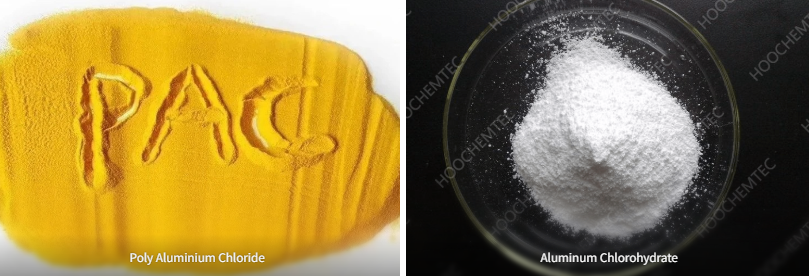
1.2 Key Parameters and the Poly Aluminium Chloride Formula
The efficiency of PAC lies within its chemical structure. Its general poly aluminium chloride formula is:
[Al2(OH)nCl6-n]m
This formula indicates that PAC is not a single molecule, but a polymer complex with a long-chain structure. Consequently, this unique structure provides strong “adsorption and bridging” capabilities, allowing it to entrap impurities like a net and facilitate precipitation.
1.3 Why Choose PAC? (Core Advantages)
High Efficiency and Low Dosage: Compared to traditional aluminum salts, PAC contains higher active ingredients. Therefore, it requires a significantly lower dosage to treat the same volume of water effectively.
Effective for Low Temperature and Low Turbidity: In challenging conditions, such as low water temperatures in winter or low turbidity levels, PAC performance significantly outperforms traditional agents.
Minimal Impact on Water Quality: Possessing strong buffering capacity, PAC causes minimal pH fluctuation in treated water. Furthermore, it leaves lower residual aluminum levels, making it safer and more environmentally friendly.
2. What is poly Aluminium chloride used for?
2.1 Main Application Areas
As a versatile agent, poly aluminium chloride uses are extensive, ranging from the water we drink to industrial discharge.
Core Focus: Poly Aluminium Chloride in Water Treatment
This is the primary domain of PAC application.
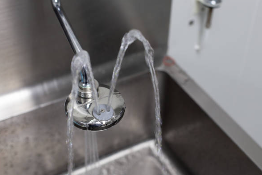
Clarification: Whether for municipal tap water or swimming pools, PAC rapidly adsorbs impurities, rendering the water clear and transparent.
Wastewater Treatment: When facing complex industrial wastewater (such as oily or colored effluents), PAC efficiently removes pollutants, assisting enterprises in meeting discharge standards.
Industrial Expansion
Beyond water treatment, Poly Aluminium Chloride uses extend to serving as a retention and drainage aid in paper mills and acts as a vital assistant in mining flotation and the casting industry.
2.2 Why is PAC Safety Management Critical?
To ensure optimal performance and personnel safety, specific characteristics of PAC must be managed carefully:
Moisture Sensitivity (Preventing Failure): Powdered PAC is highly hygroscopic. Consequently, if packaging is damaged or exposed to moisture, the product will cake and harden, becoming unusable.
Acidity (Preventing Corrosion): PAC solutions are corrosive. Therefore, anti-corrosive containers are required for storage. Furthermore, operators must wear gloves and goggles to prevent skin burns.
Strict Compliance (Risk Prevention): Whether for employee safety or environmental inspections, strict adherence to HSE regulations is a non-negotiable requirement.
3.Dosing Strategies and Two Main Usage Methods
The dosing method directly influences final water treatment efficiency and operational costs.
3.1 Method 1: Direct Dosing (for Poly Aluminium Chloride Liquid)
Poly aluminium chloride liquid is a pre-prepared solution product.
Advantages: It offers simple operation and eliminates the need for on-site dissolving equipment, ensuring a cleaner environment.
Dosing Requirements: Corrosion-resistant pipelines and metering pumps must be used for precise control.
3.2 Method 2: Dilution Before Use (for PAC Powder)
PAC powder is a highly concentrated solid product that requires on-site dissolution and dilution.
Advantages: It is highly economical for transport and occupies minimal storage space.
Dissolution Management: Dissolution must occur in dedicated tanks with mixers. Furthermore, the dilution concentration should be strictly controlled (typically around 10%), and sufficient maturation time must be allowed.
3.3 Core Principles: Rapid Dispersion and Avoiding Over-Dilution
The key to successful dosing lies in two factors. First, ensure the PAC solution contacts colloidal particles rapidly and uniformly upon injection (rapid dispersion). Second, the concentration of the diluted working solution must not be too low (avoiding over-dilution).
4. PAC Risk Management: Storage Design, Personnel Protection, and Emergency Response
Ensuring safe PAC storage and operation is critical for maintaining system stability and protecting personnel health.
4.1 Storage Area and Operational Standards
Storage Design: The storage environment must remain dry and ventilated. Liquid PAC tanks require acid-resistant materials, such as HDPE or FRP. Furthermore, secondary containment (bunds) capable of holding 110% of the largest tank’s volume must be installed to prevent spills. Additionally, storing PAC with alkaline substances is strictly prohibited.
Personnel Protection (PPE): During all operations, personnel must wear chemical safety goggles, acid/alkali-resistant gloves, and protective clothing. When dissolving powder, dust masks are required. Moreover, always adhere to the principle of “adding PAC to water”; reverse operation is strictly forbidden to prevent splashing. Emergency Facilities: The PAC area should be equipped with emergency eyewash stations and safety showers, ensuring they are accessible to operators within 10 seconds.
4.2 Emergency Response for Leaks
In the event of a leak, personnel should immediately wear PPE and isolate the affected area.
Absorption: For minor leaks, use inert materials (such as sand) to contain and absorb the spill.
Neutralization: For major leaks, alkaline substances (e.g., lime water) must be used for slow neutralization. During this process, pH levels must be monitored in real-time. Once the solution is adjusted to a neutral range, it can be disposed of in accordance with local regulations.
5. Conclusion: Safety, Efficiency, and Hoochemtec’s Professional Commitment
Procuring Poly Aluminium Chloride requires more than just comparing prices; safety compliance and supply chain risk management must be core considerations.
As a manufacturer and experienced exporter dedicated to water treatment chemicals for years, Hoochemtec deeply understands your needs. If you are seeking a reliable PAC supplier in China who provides high-quality Poly Aluminium Chloride, possesses stable export capabilities, and offers professional HSE advice, please contact us immediately.
Recently Posted
-
Why Glutaraldehyde Remains the Global "Gold Standard" in 2026
March 2, 2026In the rapidly evolving landscape of 2026, where global biosecurity and industrial hygiene have moved from peripheral concerns to Read More
 -
Hydrazine Hydrate: A Powerful Yet Potent Industrial Workhorse
March 2, 2026IntroductionIn the world of industrial chemistry, few compounds are as versatile and as demanding of respect as hydrazine hydrate. Read More
 -
Troubleshooting Common Nitrilotriacetic Acid Problems
February 26, 2026Nitrilotriacetic Acid (NTA) is a powerful chelating agent widely used to control metal ions in detergents, industrial cleaning, water treatment, and electroplating. However, users may sometimes face challenges such as persistent scaling, hazy solutions, or changes in product viscosity even when using NTA.This guide provides clear, actionable solutions to these common issues, helping you ensure NTA performs effectively and relRead More -
Industry Alert: Navigating China’s 2026 Phosphate Export Tax Changes
February 3, 2026Starting April 1, 2026, China will eliminate the VAT export tax rebate for specific organic phosphorus chemicals and inorganic pho Read More

Contact Us
Recommended Products
-
 Surfactant Coconut Monoethanol Amide(CMEA)-HOOCHEMTECNegotiableMOQ: 10 Tons
 -
Surfactant Sodium Alpha-olefin Sulfonate (AOS) Powder-HOO CHEMTECNegotiableMOQ: 1 Ton
-
Chelating Agent Ethylenediaminetetraacetic Acid (EDTA) -HOOCHEMTECNegotiableMOQ: 10 Tons
-
Surfactant Dimethylaminopropylamine (DMAPA) Flake-HOOCHEMTECNegotiableMOQ: 10 Tons
-
Effective Coagulant Aluminum Chlorohydrate (ACH) -HOOCHEMTECNegotiableMOQ: 10 Tons
-
Snow Melting Potassium Acetate -HOOCHEMTECNegotiableMOQ: 10 Tons
-
Hot Sell Corrosion Inhibitor 1,2,3-Benzotriazole /BTA-HOOCHEMTECUS$ 1MOQ: 1 Ton
-
Hot Sell Corrosion Inhibitor TTA/Tolyltriazole Granular -HOOCHEMTECUS$ 1MOQ: 1 Ton
-
Snow Melting Calcium Chloride Flake/beads-HOOCHEMTECUS$ 1MOQ: 1 Ton
-
Snow Melting Snow Melting Graular-HOOCHEMTECUS$ 1MOQ: 1 Ton
-
Water-soluble Polymer Polyethylene Oxide /PEO-HOOCHEMTECUS$ 1MOQ: 1 Ton
-
Natural Thickening and Gelling Agent Sodium Alginate Food Grade /iindustry Grade-HOOCHEMTECUS$ 1MOQ: 1 Ton
-
Anionic Surfactant Sodium Lauryl Sulfates/SLS NEEDLE 95%-HOOCHEMTECUS$ 1MOQ: 1 Ton
-
Anionic Surfactant Sodium Lauryl Ether Sulphate/SLES 70%-HOOCHEMTECUS$ 1MOQ: 1 Metric Ton
-
Isothiazolinone CMIT MITNegotiableMOQ: 1 Metric Ton

-
Hot Sell Absorbent and Desiccant Activated Clay-HOOCHEMTECUS$ 1MOQ: 1 Metric Ton
-
Xanthan GumNegotiableMOQ: 1 Metric Ton
-
Hot Sell Absorbent and Desiccant Silica Gel White/orange/blue-HOOCHEMTECUS$ 1MOQ: 1 Metric Ton
-
Sodium Molybdate Export-HOOCHEMTECNegotiableMOQ: 1 Metric Ton
-
PBTCA/2-Phosphonobutane-1,2,4-Tricarboxylic AcidNegotiableMOQ: 1 Metric Ton